In modern digital marketing, data is abundant but insight is scarce. Campaigns generate clicks, conversions, impressions, and revenue metrics, but without a proper analytics infrastructure, it’s nearly impossible to turn raw data into actionable decisions.
This is where Marketing Analytics Engineering comes in.
What Is Marketing Analytics Engineering?
Marketing Analytics Engineering (MAE) is the practice of designing, building, and maintaining data pipelines, models, and dashboards specifically for marketing insights.
It sits at the intersection of:
- Marketing strategy – knowing what metrics matter
- Data engineering – collecting and cleaning data efficiently
- Analytics – transforming data into actionable dashboards and reports
MAE ensures that marketing teams can trust their data and make decisions that drive growth.
Why Marketers Need This Skill
Traditional marketing relies on tools like Google Analytics, Mixpanel, or CRM dashboards. The problem?
- Data is often fragmented across platforms
- Metrics may be inconsistent or delayed
- Attribution models are inaccurate
- Cross-channel insights are hard to generate
A marketer skilled in Analytics Engineering can unify, clean, and structure data so insights are:
- Accurate
- Timely
- Actionable
This is especially critical for SaaS, e-commerce, and product-led growth companies.
Core Components of Marketing Analytics Engineering
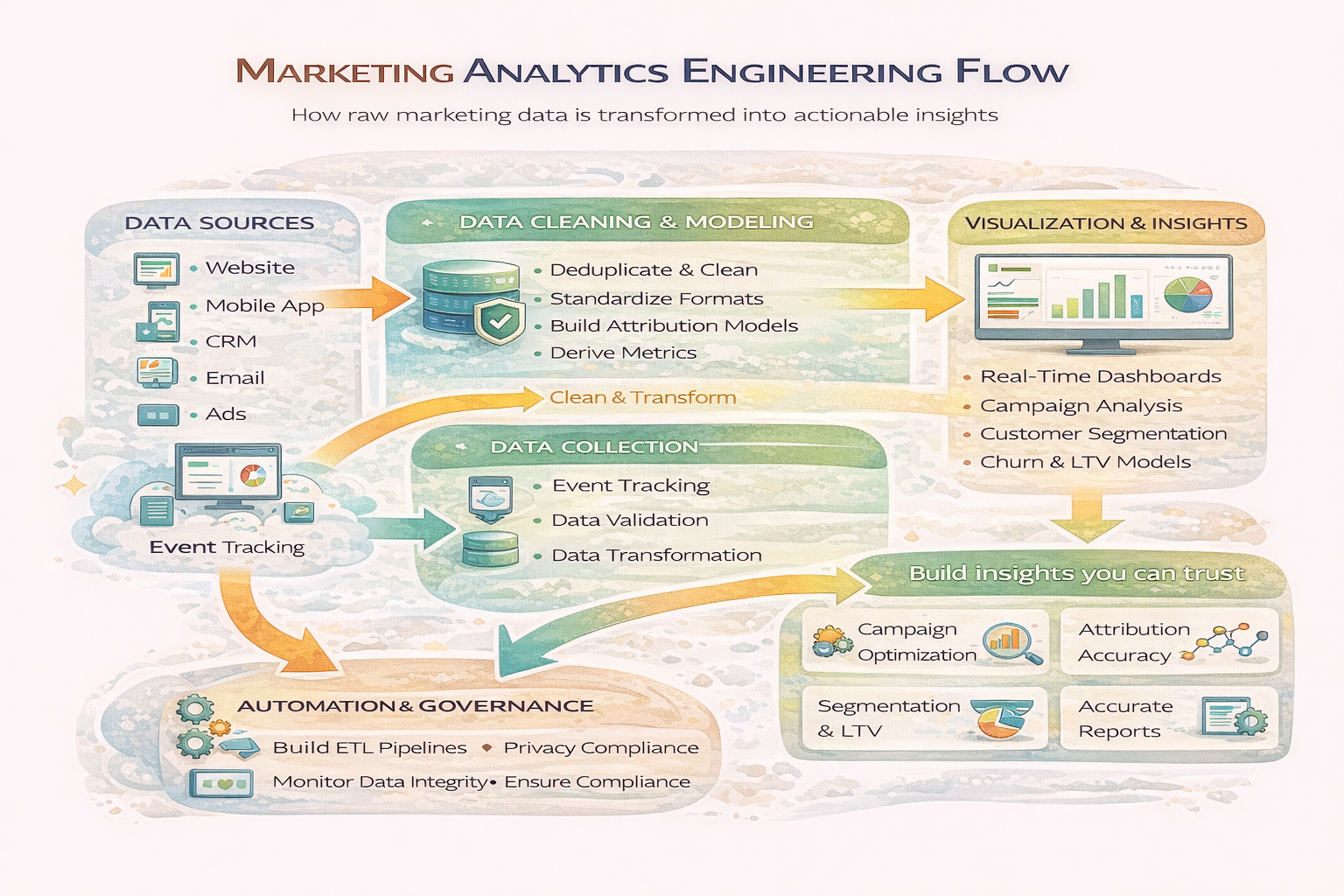
1. Data Collection
- Event tracking from websites, apps, and ads
- Integration with CRM, email, social, and ad platforms
- Ensuring consistent naming and event standards
2. Data Cleaning & Transformation
- Deduplication of events
- Standardizing formats (dates, IDs, metrics)
- Creating derived metrics (LTV, churn rate, ROI)
3. Data Modeling & Attribution
- Building multi-touch attribution models
- Segmenting users by behavior, intent, or lifecycle
- Creating predictive metrics (e.g., churn likelihood)
4. Dashboarding & Visualization
- Interactive dashboards in Tableau, Looker, Power BI
- Real-time insights for campaigns, funnels, and retention
- Clear storytelling through visuals
5. Automation & Reliability
- Automating ETL pipelines for consistency
- Monitoring data quality and alerts for anomalies
- Ensuring privacy compliance in analytics pipelines
Marketing Analytics Engineering vs Traditional Analytics
| Traditional Marketing Analytics | Marketing Analytics Engineering |
|---|---|
| Tool-dependent | Data-pipeline dependent |
| Limited to what the tool tracks | Full control over data architecture |
| Metrics may be inconsistent | Metrics are accurate, modeled, and validated |
| Reports often static | Dashboards are dynamic and actionable |
Real-World Use Cases
- Campaign Optimization: Identify which channels drive real revenue instead of just clicks
- Customer Segmentation: Build behavior-driven segments that update in real-time
- Attribution Accuracy: Resolve multi-touch attribution across web, mobile, and paid media
- Predictive Growth: Forecast LTV, churn, and conversion probability
Why This Skill Is in High Demand
Companies increasingly rely on data-driven growth. Marketing Analytics Engineers:
- Enable smarter spend decisions
- Reduce wasted ad budget
- Improve campaign efficiency
- Connect strategy with execution
In short, they turn marketing data into a competitive advantage.
The Future of Marketing Analytics Engineering
- Real-time dashboards for adaptive campaigns
- Cross-channel measurement without third-party cookies
- AI-assisted modeling for predictive marketing
- Privacy-first analytics pipelines
Brands that master this skill will not just report metrics they will predict, optimize, and grow.
Final Thought
Marketing is only as good as the data behind it.
Marketing Analytics Engineering ensures that every decision, campaign, and dollar is backed by clean, reliable, and actionable data turning chaos into clarity and insights into revenue.