How Modern Brands Build, Own, and Activate Their Data
Introduction
As third-party cookies disappear and privacy expectations rise, first-party data has become the most valuable asset in digital marketing. But collecting data is no longer enough. The real advantage comes from engineering first-party data correctly so it’s accurate, scalable, compliant, and actionable.
This is where First-Party Data Engineering for Marketers comes in.
What Is First-Party Data Engineering?
First-party data engineering is the process of designing, collecting, structuring, storing, and activating user data directly from your owned channels such as websites, apps, emails, and products.
It combines:
- Marketing strategy
- Data architecture
- Privacy compliance
- Real-time activation
In short: it turns raw user behavior into usable intelligence.
Why Marketers Must Think Like Data Engineers
Traditional marketing relied on platforms owning the data. Today, brands must own their own pipelines.
Without proper data engineering:
- Events are inconsistent
- Segments are inaccurate
- Personalization breaks
- Analytics becomes misleading
With it:
- Data becomes reliable
- Experiences become smarter
- Revenue attribution improves
Core Components of First-Party Data Engineering
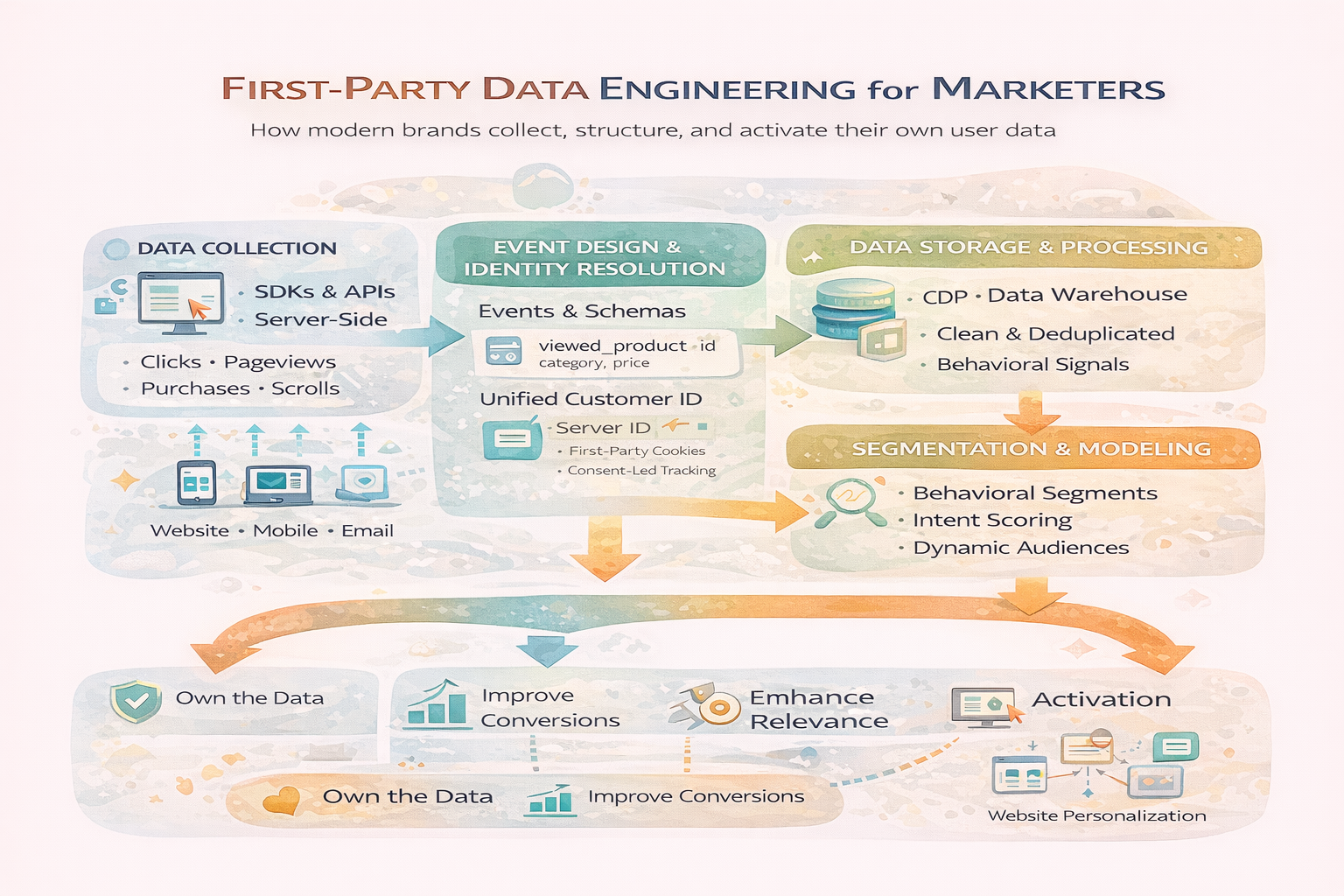
1. Data Collection Layer
This is where user signals originate:
- Page views
- Clicks
- Scroll depth
- Form interactions
- Purchases
Collected via:
- JavaScript SDKs
- Server-side tracking
- APIs
Key focus: accuracy and consent.
2. Event Design & Naming Standards
Poorly named events create chaos.
Good data engineering defines:
- Event schemas
- Required attributes
- Consistent naming conventions
Example:product_viewed → product_id, category, price, source
3. Identity Resolution
Users are not just sessions.
This layer connects:
- Anonymous users
- Logged-in users
- Repeat visitors
Using:
- First-party cookies
- User IDs
- Email hashes
This creates a single customer view.
4. Data Storage & Processing
Data is stored in:
- CDPs
- Data warehouses
- Real-time event streams
Processing includes:
- Deduplication
- Enrichment
- Aggregation
This ensures data is clean and usable.
5. Segmentation & Intent Modeling
Once engineered, data is activated into:
- Behavioral segments
- Intent scores
- Lifecycle stages
Example:
- Browsed pricing page twice → high intent
- Repeated visits without action → hesitation
6. Activation Layer
This is where marketing comes alive:
- Website personalization
- Targeted messaging
- Email triggers
- Product recommendations
All powered by first-party data no external dependencies.
Privacy & Compliance by Design
First-party data engineering respects:
- User consent
- Regional regulations (GDPR, DPDP, etc.)
- Data minimization
Modern systems dynamically adapt experiences based on consent status.
Why This Skill Is a Career Advantage
Marketers who understand first-party data engineering:
- Build resilient strategies
- Reduce platform dependency
- Lead personalization initiatives
- Speak both marketing and tech
This skill sits at the intersection of growth, data, and trust.
Final Thought
The future of digital marketing isn’t about more tools it’s about better data foundations. Brands that engineer their first-party data intelligently will own their audience, their insights, and their growth.