Digital marketing is evolving fast but most strategies are still stuck optimizing clicks, traffic, and impressions.
What if the real opportunity isn’t more users…
but better experiences?
That’s where Behavioral Experience Optimization (BXO) comes in.
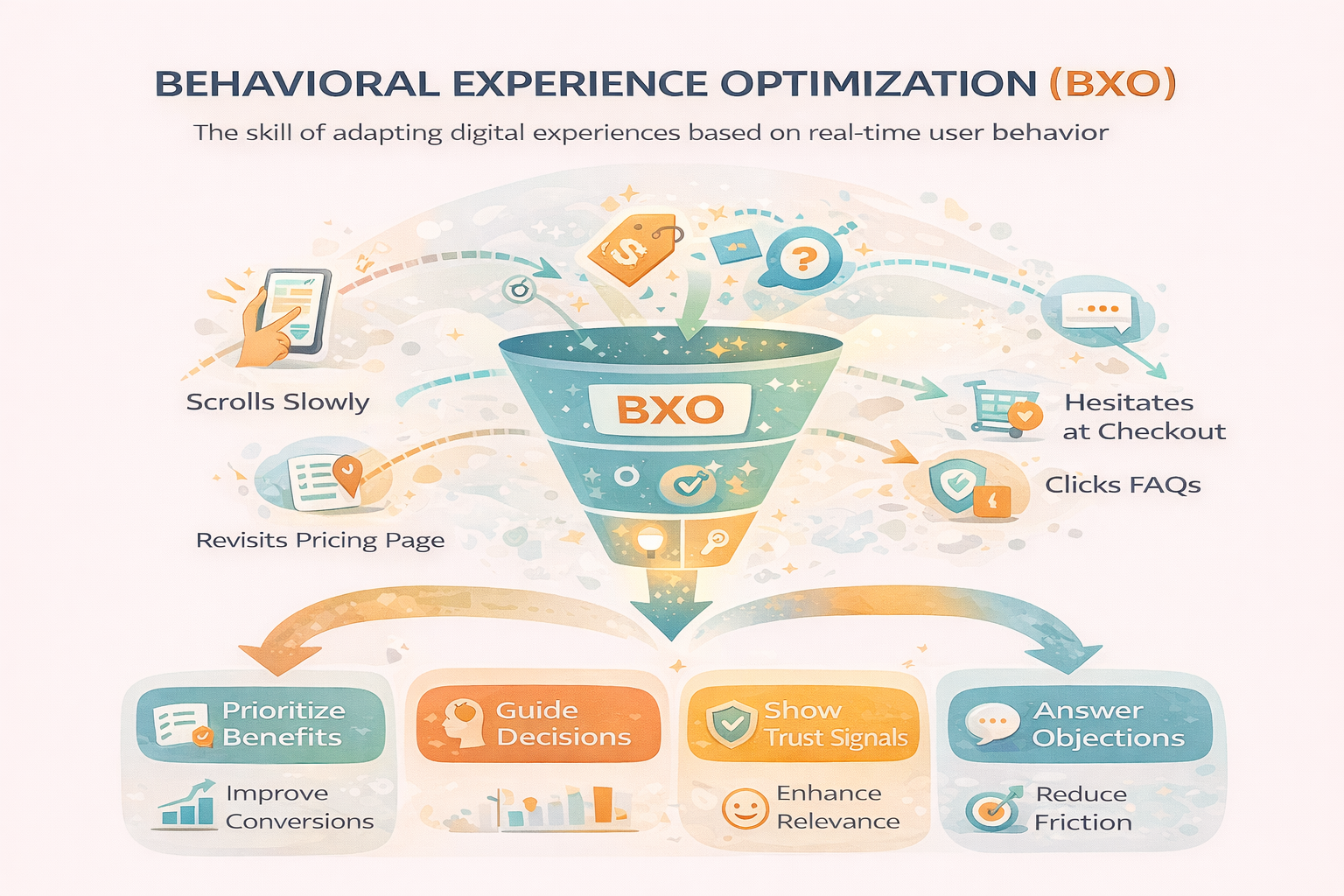
BXO is the skill of understanding real-time user behavior and dynamically adapting digital experiences to match intent, emotion, and decision stage.
It’s not about louder marketing.
It’s about smarter responses.
What Is Behavioral Experience Optimization (BXO)?
Behavioral Experience Optimization focuses on:
- What users do, not just who they are
- How they behave, not where they came from
- Why they hesitate, not why they clicked
BXO turns websites from static pages into intelligent, responsive experiences.
Instead of asking:
“How do we get more traffic?”
BXO asks:
“How do we respond better to the traffic we already have?”
Why Traditional Optimization Falls Short
Most optimization strategies focus on:
- A/B testing fixed variants
- Predefined funnels
- Static segments
- One-time assumptions
But modern users:
- Jump between stages
- Switch devices
- Revisit multiple times
- Change intent mid-session
Traditional optimization can’t keep up with this behavior. But BXO can.
How Behavioral Experience Optimization Works
BXO reads behavioral signals in real time, such as:
- Scroll depth
- Time spent
- Click patterns
- Page revisits
- Hover behavior
- Exit intent
These signals reveal:
- Interest
- Confusion
- Comparison
- Readiness
- Friction
The experience then adapts instantly:
- Messaging changes
- CTAs evolve
- Content prioritizes relevance
- Nudges appear only when needed
The result?
A journey that feels natural not forced.
BXO vs CRO vs SEO
| Skill | Focus | Limitation |
|---|---|---|
| SEO | Visibility | Doesn’t guide decisions |
| CRO | Conversion | Often static & test-based |
| BXO | Behavior & intent | Real-time & adaptive |
BXO doesn’t replace SEO or CRO it connects them through experience.
Why BXO Is a High-Value Niche Skill
BXO sits at the intersection of:
- Digital psychology
- Data-driven marketing
- Personalization
- UX strategy
- AI-ready systems
Few marketers truly master this space, making BXO:
- Rare
- Differentiating
- Highly valuable
As AI-driven personalization grows, strategy becomes more important than tools and BXO is that strategy.
Real-World BXO Examples
- A user revisits pricing → show comparison help
- A user scrolls slowly → highlight benefits
- A user hesitates at checkout → display trust badges
- A returning visitor → show personalized recommendations
No pop-up spam.
No guessing.
Just relevance.
Why Users Respond Better to BXO
Users don’t want:
- Interruptions
- Repetition
- Pressure
They want:
- Clarity
- Guidance
- Relevance
BXO delivers experiences that feel:
- Human
- Timely
- Helpful
That’s why it drives:
- Higher engagement
- Lower bounce rates
- Faster decisions
- Better conversions
The Future of Digital Marketing Is Behavioral
Marketing is shifting from:
- Campaigns → Conversations
- Funnels → Journeys
- Targeting → Understanding
Behavioral Experience Optimization is not a trend.
It’s the foundation of how digital experiences will work going forward.
Final Thought
Traffic brings users in.
Content informs them.
Experience decides everything.
Behavioral Experience Optimization is the skill that turns attention into action by listening before speaking.
In a world full of noise, the brands that understand behavior will always stand out.